Why You Hide Even When It's Safe: The Nervous System Logic of Invisibility
Hiding when it's unsafe is protection. Hiding when it's safe is a pattern. The nervous system doesn't automatically update when circumstances change—it responds to what it learned, not what's true now. If visibility once meant danger, judgment, or rejection, your body may still treat being seen as a threat, even in relationships and environments where it's no longer warranted. This isn't self-sabotage. It's outdated safety logic.
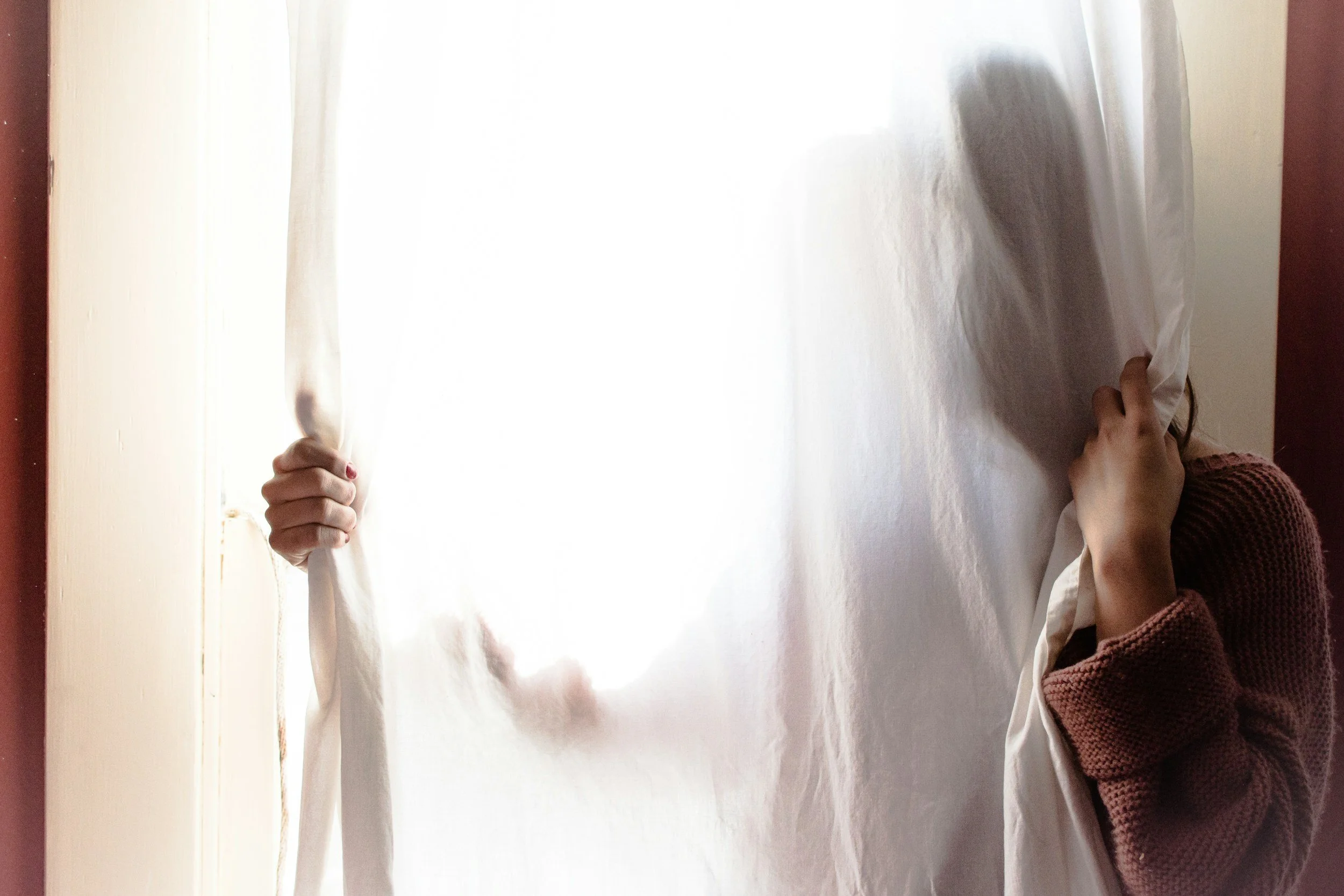
You've done the work. You've chosen environments that are softer. Relationships that are kinder. You're no longer in the room where you first learned to disappear.
And still—when the spotlight turns toward you, something tightens. When someone really looks at you, something pulls back. When there's space to be seen, known, celebrated, your body finds a way to make itself smaller.
You don't understand it. Logically, you know you're safe. You know these people won't hurt you. You know this is what you wanted.
But your body doesn't seem to have received the memo.
Why Do I Hide Even When I Know I'm Safe?
Visibility is not a mental calculation—it's a somatic event.
Your nervous system doesn't evaluate your current environment and conclude, "This is safe, I can relax now." It responds to patterns. To memory. To what it learned long before you had words.
If being seen once meant criticism, control, ridicule, or loss of connection, your system learned to associate visibility with threat. And that learning doesn't dissolve just because the context changes.
Safety, in this sense, is not about the room you're in. It's about what your body believes will happen when you're truly seen.
Hiding Is Not Cowardice—It's Adaptation
Let's be clear: you didn't learn to hide because you were weak.
You learned to hide because, at some point, it worked. It kept you safe. It kept you connected. It helped you survive dynamics that would have been unbearable if you'd stayed fully visible.
Hiding was intelligent. The problem is not that you learned it. The problem is that the learning outlasted the danger.
The Nervous System Doesn't Auto-Update
This is the part that trips people up:
You move to a new city. You leave the relationship. You build a life that's nothing like the one you came from. And you expect your body to follow.
But the nervous system is conservative. It holds onto patterns that once kept you alive—even when those patterns no longer serve you. It doesn't know the danger is over until it experiences safety, repeatedly, in the body.
Knowing you're safe is not the same as feeling safe. And it's the feeling that runs the show.
The Difference Between Safety and Familiarity
Here's a subtlety worth sitting with:
Sometimes what feels safe isn't actually safe. It's just familiar.
Hiding might feel like relief. Like control. Like protection. But that doesn't mean it's serving you anymore. It might just mean your system has learned to confuse smallness with security.
True safety doesn't require you to disappear. It allows you to stay visible—and still be okay.
What Visibility Actually Asks of You
Being seen is not passive. It requires something.
It asks you to hold your ground while someone else perceives you. It asks you to tolerate not controlling how you're received. It asks you to stay in contact with yourself—even as another's attention lands on you.
For a system trained in disappearance, this is not a small ask. It's an enormous act of nervous system regulation.
The Hidden Cost of Staying Invisible
Hiding keeps you safe—but it also keeps you alone.
Not physically alone, necessarily. But relationally. Emotionally. You can be surrounded by people who care about you and still feel unseen—because you've made sure they only ever see the version of you that feels manageable.
The cost of invisibility isn't always obvious. It shows up as a quiet ache. A sense that something is missing. A hunger that doesn't have a name.
You want to be known. And you keep making sure you're not.
Visibility and the Fear of Taking Up Space
For many people, the fear of being seen is tangled with the fear of being too much.
Too loud. Too needy. Too intense. Too different. Too real.
Somewhere along the way, you learned that your full presence was a problem. That your needs were burdensome. That your visibility came at someone else's expense.
So you made yourself smaller. Not because you wanted to—but because you believed it was the only way to stay in connection.
What's Actually Happening in the Body
When visibility feels threatening, the body responds:
Breath shortens. Chest tightens. Gaze drops. Shoulders round inward. Voice softens or disappears. Thoughts scatter.
This is not drama. This is physiology.
Your system is trying to make you less detectable—because somewhere in its memory, being detected was dangerous.
Learning to stay visible means learning to stay in the body while these sensations arise. Not overriding them. Not pushing through. Just staying.
A Practice: Letting Yourself Be Seen in Small Doses
You don't need to leap into full exposure.
Start smaller.
Notice what happens when someone looks at you directly. Not what you think—what you feel. Where does your body want to go? What's the impulse?
Then, without forcing anything, see if you can stay a little longer. One breath. Two.
Not performing visibility. Just not leaving.
Over time, the window expands. Not because you've conquered fear, but because your system learns—through experience—that visibility doesn't have to end in pain.
Why Intimacy Requires Visibility
This is the tender part:
You cannot be truly close to someone while hiding.
You can be liked. You can be appreciated. You can be needed. But you cannot be known—not really—if you're only ever showing the parts you've deemed acceptable.
Intimacy asks for presence. For realness. For the risk of being seen in your uncertainty, your desire, your edges.
And for many people, this is the deepest reason they stay hidden: not because they fear rejection, but because they fear what closeness would actually require of them.
Visibility Is Not a Performance
There's a version of "being seen" that's still a kind of hiding.
It looks confident. It speaks clearly. It shows up. But it's a curated version—a performance of visibility that keeps the real self protected behind the presentation.
True visibility is not about being louder or bolder. It's about being present. Letting yourself be witnessed not in your polish, but in your presence.
That's the edge. That's where the growth lives.
Signs This Might Be Happening for You
You dim yourself in groups, even when you have something to say
You deflect compliments or redirect attention away from yourself
You feel exposed or uncomfortable when someone focuses on you
You carefully manage how much of yourself you reveal
You long to be known—but find yourself hiding anyway
You perform confidence while feeling invisible inside
You've left conversations wishing you'd let yourself be more real
You notice a familiar relief when attention moves elsewhere
FAQ
Why do I hide even when I know the other person is safe? Because your nervous system isn't responding to this person—it's responding to a pattern. If visibility was once linked to danger, your body may still treat being seen as a threat, regardless of who's looking.
Is this the same as introversion? Not necessarily. Introversion is about energy and preference. This is about protection—a nervous system pattern that hides you even when you might want to be seen. Some introverts are fully visible in their quietness; some extroverts are hiding in plain sight.
How do I stop hiding? Not by forcing visibility, but by building capacity for it. This means gradually exposing yourself to being seen—in safe contexts—and letting your system learn, over time, that visibility doesn't end in harm.
What if I don't even know I'm hiding? That's common. Hiding can become so automatic it feels like personality. The clue is often in the gap between how known you want to feel and how known you actually let yourself be.
You learned to hide for a reason. It wasn't random. It wasn't weakness. It was your system doing what it needed to do to keep you safe, connected, intact.
But safety has changed. The room has changed. The people have changed.
And now, the question is no longer how do I protect myself from being seen?
It's can I stay present while being seen—and trust that I'll still be okay?
That's not a question you answer once. It's a practice you return to. A capacity you build. A softening that happens slowly, in moments you might not even notice.
You don't have to become someone who loves the spotlight. But you can become someone who no longer has to leave the room—internally—just because someone looked your way.
If you recognise yourself in this—if hiding has become so automatic you're not sure how to stay—this is the kind of work that unfolds over time, not in a single conversation.
→ The Grounding – 6 Sessions (€690) A structured, spacious container for building nervous system capacity, emotional safety, and the ability to stay present—with yourself and others—when it matters most.
